
Short answer
Check the thermostat is set to Cool, replace a dirty filter, and confirm the outdoor unit is running. If the outdoor fan is still, the coil is frozen, or the breaker trips, turn the system off and call a technician: those point to a capacitor, contactor, refrigerant leak or motor failure.
Start with the simple checks
A surprising share of warm-air calls are settings and filters.
- Thermostat on Cool, set below room temperature, fan on Auto
- Fresh batteries in the thermostat
- Filter not visibly gray or bowed
- Breaker and outdoor disconnect switched on
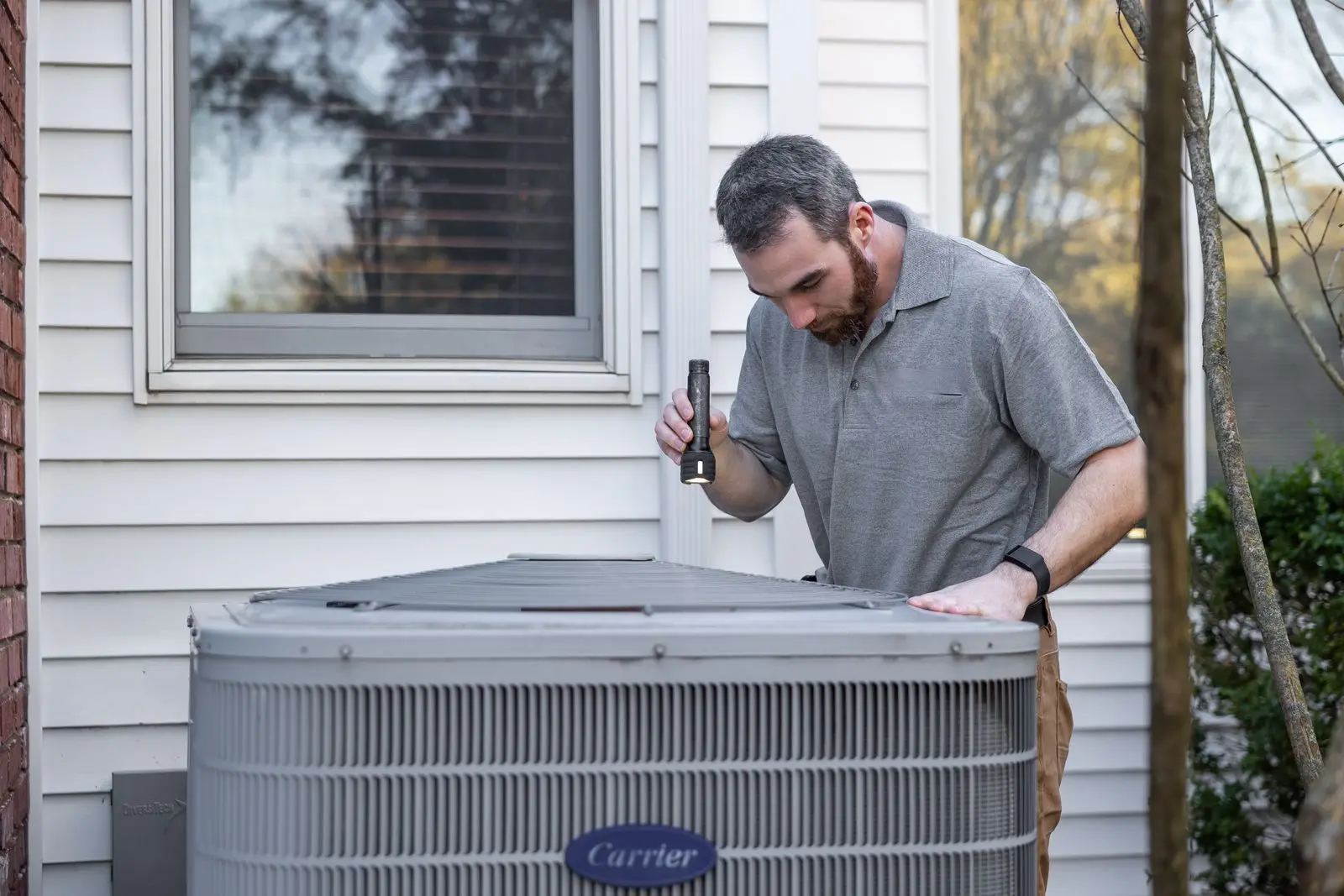
Look at the outdoor unit
With the system calling for cooling, the outdoor fan should spin and you should hear the compressor. A hum with no fan movement usually means a failed capacitor or fan motor. Don't poke the fan with a stick; the capacitor can shock you.
Look for ice
Ice on the copper line or indoor coil means low airflow or low refrigerant. Turn cooling off and run Fan only to thaw it. Running a frozen system can damage the compressor.
Check for a tripped float switch
If the thermostat is blank or the system stopped entirely, a float switch may have shut it down because the condensate drain is clogged. Look for water in the pan under the attic air handler.
When to call and what the tech does
Call if the simple checks don't fix it. The tech measures capacitor values, amp draw, refrigerant pressures and temperature split, then gives a written price before repairing.
Questions
Can low refrigerant cause warm air?+
Yes. Low refrigerant means a leak, and the system can't absorb enough heat. It needs a leak repair, not just a top-off.
How much cooler should vent air be than room air?+
Typically 15–20°F cooler than the air going into the return. A smaller difference suggests a problem.
Editorial note: this guide is general information for homeowners, not a diagnosis. Desertline Heating & Air is a referral service; a licensed contractor should inspect your equipment before repairs.